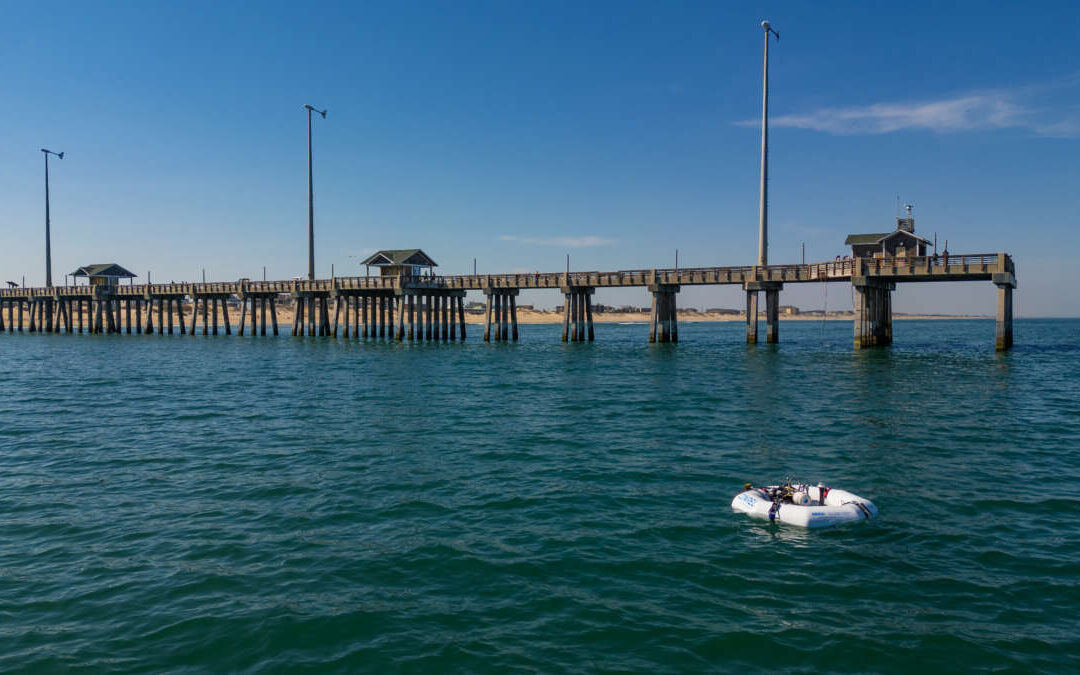
On the heels of the announcement made in early 2026 that CSI and its 10-meter wave tank had been designated as a Testing Expertise and Access for Marine Energy (TEAMER) facility, there is now more exciting news to share. This summer, CSI’s Marine Energy Test Center at Jennette’s Pier was also recognized as a TEAMER facility!
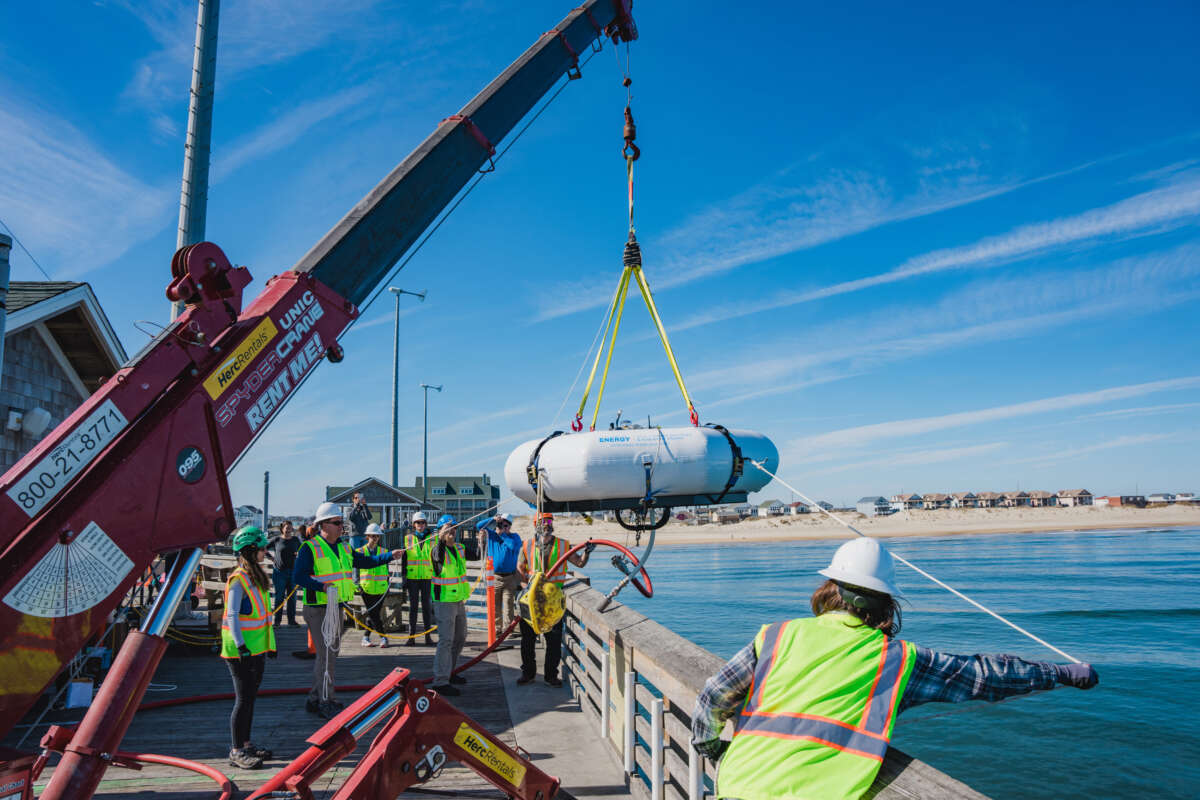
TEAMER is a funding platform that plans to distribute $25 million over the course of several application cycles to support marine energy testing and development. Sponsored by the U.S. Department of Energy’s Water Power Technologies Office and directed by the Pacific Ocean Energy Trust, TEAMER is comprised of over 80 sites across the U.S. that offer one or more areas of expertise, including Numerical Modeling & Analysis; Laboratory & Bench Testing; and Tank/ Tunnel/Flume/Basin Testing; and Open Water Support. TEAMER pairs marine energy technology developers with expert researchers at these facilities to advance the industry, accelerate technologies toward commercialization, and get devices in the water for renewable energy production.
As the leader of the North Carolina Renewable Ocean Energy Program (NCROEP) and a founding member of the Atlantic Marine Energy Center (AMEC), an already designated non-open water TEAMER site, and a research and educational partner of Jennette’s Pier, CSI is well-qualified to continue the expansion of its services. Soon the Wave Energy Test Center at Jennette’s Pier will be publicly listed on the TEAMER website as offering both Open Water Capabilities and Facilities support.
“Being designated as a TEAMER open-water test facility marks a pivotal milestone for the Coastal Studies Institute. Real-world, open-water testing is the essential bridge needed to accelerate the deployment and commercialization of marine energy technologies,” says NCROEP Director George Bonner.
“We have a unique opportunity to demonstrate these innovative technologies in actual ocean conditions while directly engaging the public and key stakeholders.”
Through annual open funding calls, TEAMER support for marine energy testing and development projects are available to applicants worldwide so long as they partner with one of the network facilities. A successful Request for Technical Support, or RFT, is completed through a five-step process as follows:
- Pre-consult: An applicant chooses a partner facility within the TEAMER network and discusses their needs.
- Apply: If the applicant and facility feel they are a good match, together they submit an online RFT application.
- Plan: The approved applicant and facility prepare a detailed plan.
- Test: The partner facility provides technical support within nine months of test plan approval.
- Report: After testing and technical support are complete, the applicant submits a report that will be made publicly available.
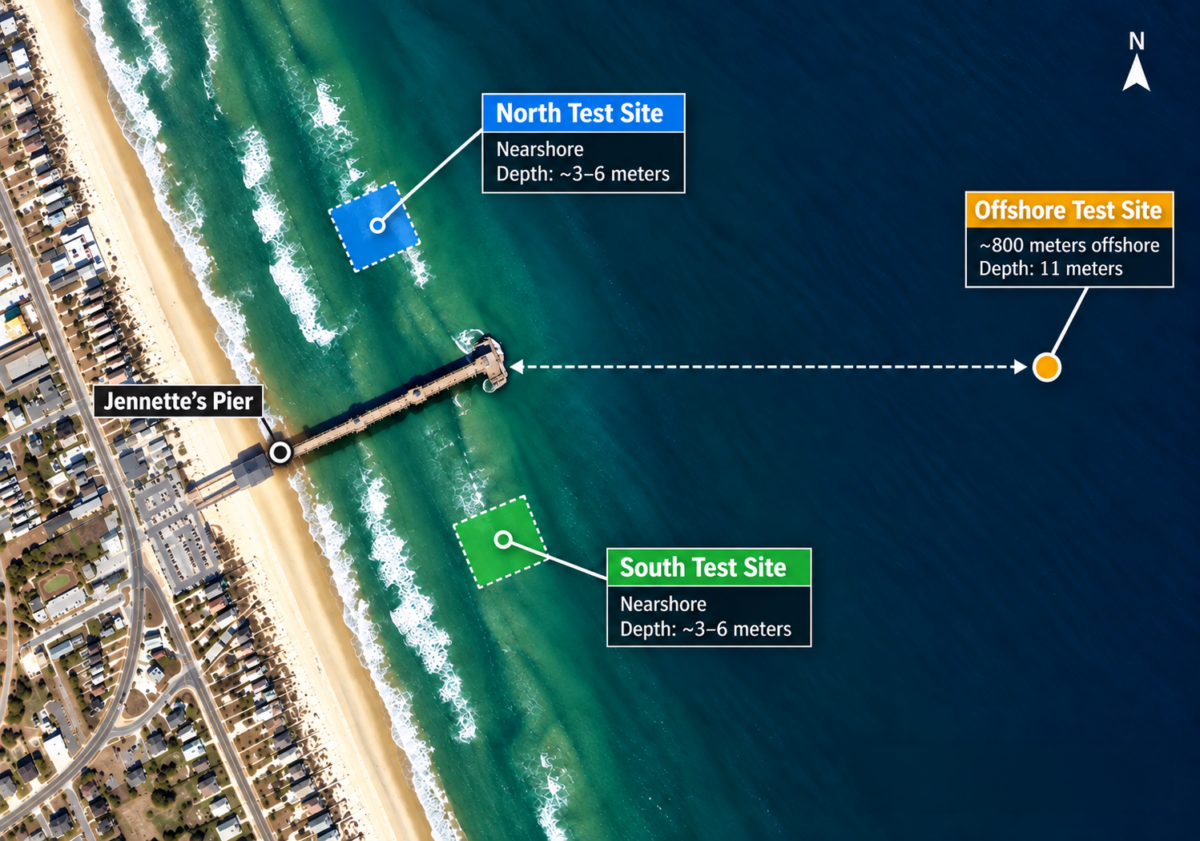
Those selected by TEAMER to partner with the CSI Marine Energy Test Site will find that the facility has much to offer. The site boasts three test berths to accommodate a variety of marine energy devices.
“Among CSI’s many capabilities are research vessels equipped to support the deployments and recoveries of devices, as well as resource monitoring instruments that capture valuable information on weather and wave conditions. Furthermore, to ensure we remain committed ocean stewards, CSI also offers environmental monitoring capabilities, such as bioacoustics surveys, helping us better understand the potential ecological impacts of marine energy devices,” elaborates Amy Thompson, an AMEC staff member who facilitated CSI’s application process to become a designated TEAMER site.
The site is currently suitable for scaled field and open-water testing, general component testing, and power-take-off testing. Micro-grid capabilities are also in the works and will hopefully be added to the suite of offerings soon.
With TEAMER support and the capabilities CSI shares between its two designated sites, the possibilities for marine energy are nearly endless.
“By tapping into the ocean’s vast potential, marine energy will play a vital role in bolstering national security with affordable, reliable power—while opening new frontiers for power at sea to drive ocean-based economic activities and support autonomous national security platforms,” Bonner reflects.
To learn more about TEAMER and CSI’s designated facilities, watch the video below.
The preceding story first appeared in the Summer 2026 edition of CoastLines, published in September.
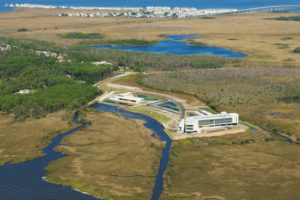 The ECU Outer Banks campus is home to the Coastal Studies Institute.
 Based at the Coastal Studies Institute (CSI), the North Carolina Renewable Ocean Energy Program (NCROEP) advances inter-disciplinary marine energy solutions across UNC System partner colleges of engineering at NC State University, UNC Charlotte, and NC A&T University. Click on the links below for more information.