Join us for the December 2026 installment of the Science on the Sound Lecture Series at the Coastal Studies Institute on the ECU Outer Banks Campus. This monthly, in-person lecture series brings perspectives from all over the state and highlights research and topics relevant to the coast and northeastern North Carolina. This month, students from UNC-Chapel Hill’s Outer Banks Field Site (OBXFS) will present their capstone research findings at 3 p.m. on Thursday, Dec. 10, 2026, in a presentation titled “Marine Soundscapes and Community Perspectives of the Wave Energy Test Site at Jennette’s Pier.”
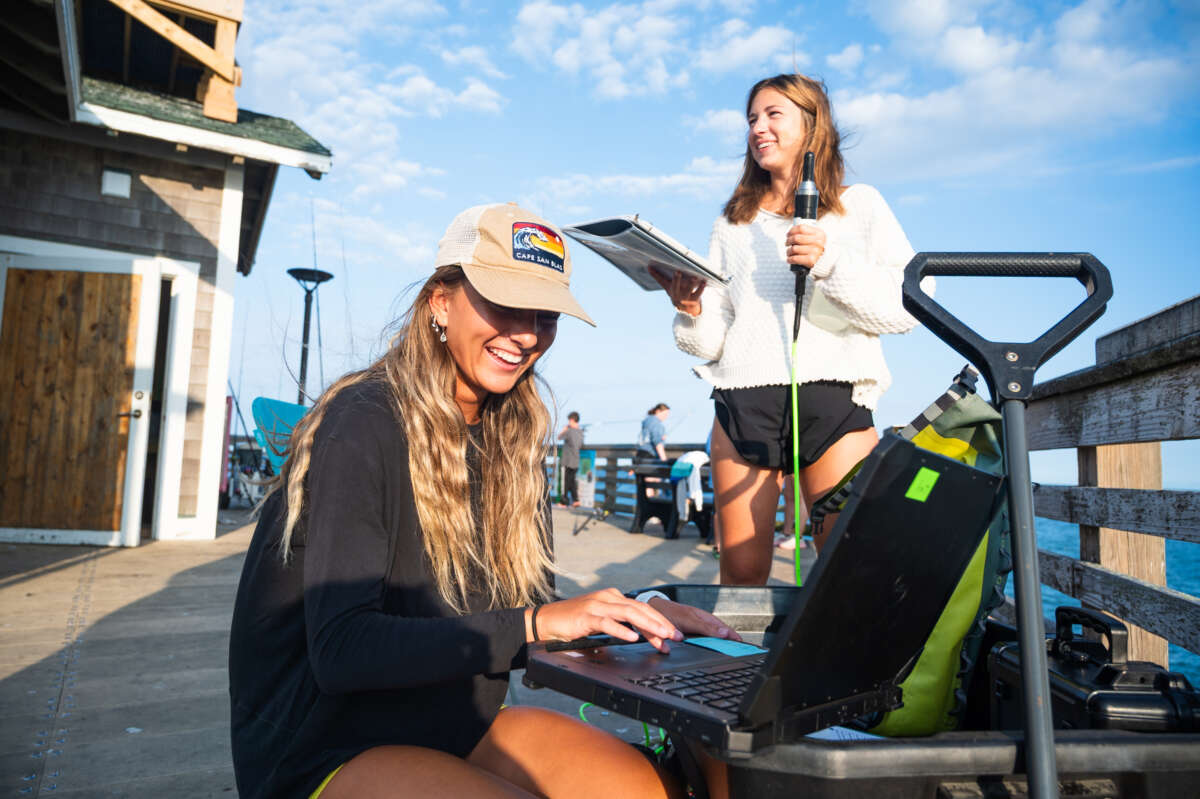
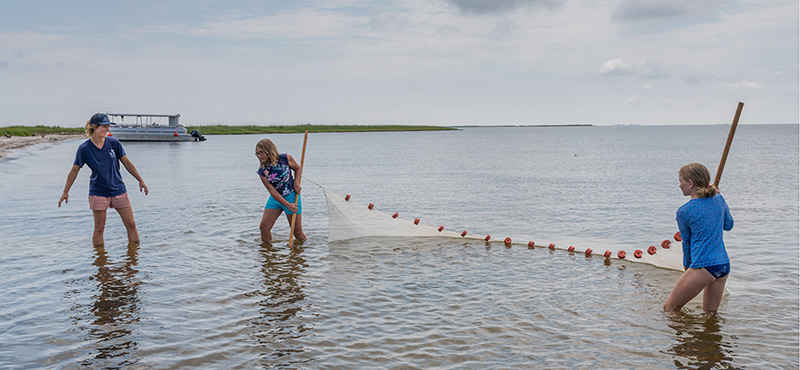
Each year, students in the UNC Outer Banks Field Site program apply their academic knowledge to research projects addressing issues relevant to northeastern North Carolina. This year’s capstone project explores the potential environmental and social impacts of testing wave energy technologies at Jennette’s Pier in Nags Head. Students investigated whether sounds produced by wave energy devices could interfere with the sounds fish use to communicate and navigate. They also interviewed anglers and surfers who regularly visit the pier to better understand their perspectives on marine renewable energy. Together, these investigations offer insights into the potential benefits and challenges of developing wave energy technologies along the North Carolina coast.
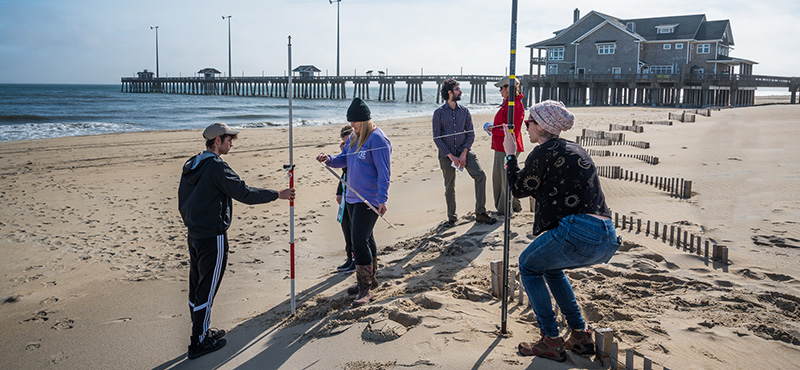
OBXFS students deploying a hydrophone to record underwater sounds at Jennette’s Pier in Nags Head, NC.

OBXFS students deploying a hydrophone to record underwater sounds at Jennette’s Pier in Nags Head, NC.

The Outer Banks Field Site is a semester-long undergraduate program of UNC-Chapel Hill’s Institute for the Environment, hosted each fall by CSI. During the program, students take classes, participate in internships and complete a capstone research project.

“The Capstone research asks OBXFS students to think both broadly and deeply about a topic they may have never considered before. For this year’s project on wave energy, it’s an emerging topic globally as well, and we’re excited about how the students’ research can contribute to such a young field,” said Linda D’Anna, associate director of the UNC Outer Banks Field Site.
The program is free, and the public is encouraged to attend. The program will also be live-streamed on the CSI YouTube Channel and archived for later viewing.

Led by East Carolina University (ECU), The Coastal Studies Institute is a multi-institutional research and educational partnership of the UNC System including North Carolina State University, UNC-Chapel Hill, UNC Wilmington, and Elizabeth City State University.

MORE INFORMATION

CSI BOARD OF DIRECTORS

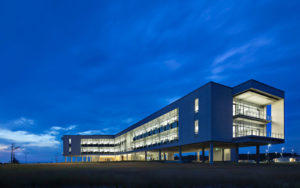
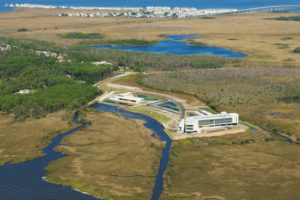
The ECU Outer Banks campus is home to the Coastal Studies Institute.
Located on Roanoke Island along the banks of the second largest estuary
in the United States, this coastal campus spans 213 acres of marshes, scrub wetlands, forested wetlands, and estuarine ecosystems.

ECU OUTER BANKS CAMPUS

FACILITIES

SUSTAINABLE CAMPUS


Based at the Coastal Studies Institute (CSI), the North Carolina Renewable Ocean Energy Program (NCROEP) advances inter-disciplinary marine energy solutions across UNC System partner colleges of engineering at NC State University, UNC Charlotte, and NC A&T University.  Click on the links below for more information.
ABOUT THE PROGRAM

JENNETTE'S PIER WAVE ENERGY TEST CENTER

SMALL-SCALE WAVE TANK

The faculty and staff at the Coastal Studies Institute come from a variety of backgrounds and disciplines, as well as departments and organizations including ECU Department of Biology, ECU Department of Coastal Studies, NC Sea Grant, the North Carolina Renewable Energy Program, and the UNC Institute for the Environment.

MEET THE TEAM

Tour the ECU Outer Banks Campus and learn about the research, education, and engagement projects of CSI and ECU Integrated Coastal Programs through our 360 virtual tour.

VIRTUAL TOUR