
If the Atlantic Ocean is at the Outer Banks’ front door, then the Albemarle-Pamlico Estuarine System (APES) is the area’s beloved backyard. The productive, brackish sound waters teem with life that sustains the local economy and overall way of life, while the wetlands and fringing marshes help protect the community from coastal hazards and the impacts of natural disasters. The APES is a beloved part of home for many Outer Bankers, but unfortunately, it is increasingly threatened by extreme weather events.
The Albemarle-Pamlico Estuarine System is the second-largest estuary in the United States, and its shallow depths and limited exchange with the ocean make it exceptionally vulnerable to drastic changes. As such, NC Sea Grant recently funded a research proposal submitted by three ECU- CSI faculty members. Drs. Qubin Qin, Mike O’Driscoll, and Sean Charles are studying how storms and droughts alter salinity patterns, pollution transport, and connectivity across the estuary.
“These hydrologic extremes often occur during late summer and early fall, a critical period for estuarine ecosystems,” the researchers explained in their proposal. “Take salinity as an example,” they continued. “At this time, high temperatures and evapotranspiration often result in peak salinity, while seasonal wind patterns enhance marine influence in shallow systems like the APES. Late summer also coincides with peak biomass in marshes and SAV, which are especially sensitive to abrupt changes in salinity. If a drought elevates salinity, or if a storm pushes saltwater into oligohaline and freshwater wetlands, the resulting exposure during this sensitive season can lead to vegetation mortality and prolonged degradation of water quality and habitat conditions.”
Qin, O’Driscoll, and Charles’ research will be conducted over the next two years and will provide information to bolster water quality management and community resilience in North Carolina and beyond. They plan to divide and conquer to maximize their strengths and produce the most meaningful results.
Dr. Qin will lead the efforts to develop high-resolution hydrodynamic models that will increase understanding of the effects of storm and drought events on estuary flushing, salinity intrusion, and pollutant dynamics across the APES. Transport, connectivity, and retention patterns in the estuary will also be included in the models.
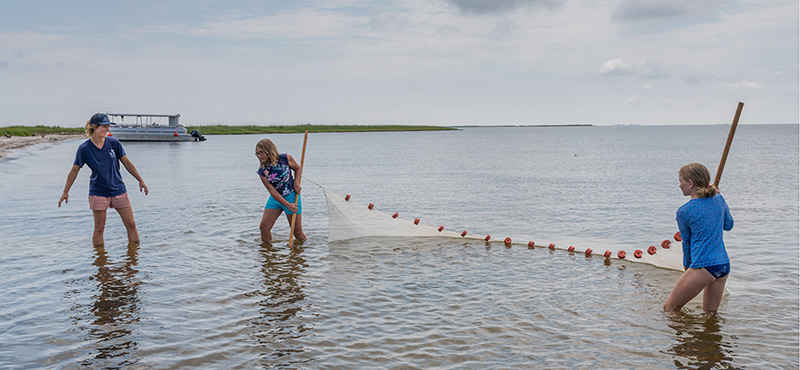
Drs. Charles and O’Driscoll will carry out the fieldwork required to further validate the models. Charles will conduct boat-based surveys in the late summer before and after storms to collect salinity data, while O’Driscoll will maintain and monitor fixed stations that collect salinity data near the Pamlico and Tar Rivers. Dr. O’Driscoll will also oversee the collection of long-term data sets that include multi-decadal spatial and temporal coverage of salinity, water levels, and water-quality parameters from a variety of state and federal agencies to further calibrate the models and provide further insight into both storm- and drought-driven disturbances in the APES.
Upon assessing all data, including the completed models, Qin, O’Driscoll, and Charles expect to identify patterns of estuarine response to extreme weather events and highlight vulnerable areas within the APES that are at a higher risk of erosion, flooding, and pollution. Additionally, they aim to provide actionable recommendations for water quality management, as well as accessible maps and metrics for stakeholders.
The preceding story first appeared in the Summer 2026 edition of CoastLines, published in September.
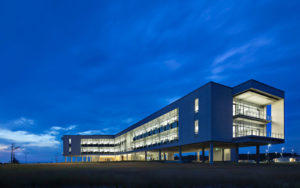
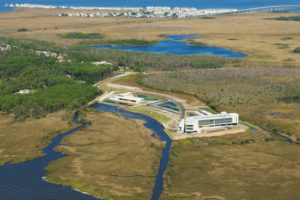 The ECU Outer Banks campus is home to the Coastal Studies Institute.
 Based at the Coastal Studies Institute (CSI), the North Carolina Renewable Ocean Energy Program (NCROEP) advances inter-disciplinary marine energy solutions across UNC System partner colleges of engineering at NC State University, UNC Charlotte, and NC A&T University. Click on the links below for more information.