Newsletter Signup
Stay informed on the current research and and education projects of the Coastal Studies Institute by signing up for our regular newsletter.

 Led by East Carolina University (ECU), The Coastal Studies Institute is a multi-institutional research and educational partnership of the UNC System including North Carolina State University, UNC-Chapel Hill, UNC Wilmington, and Elizabeth City State University.
 Based at the Coastal Studies Institute (CSI), the North Carolina Renewable Ocean Energy Program (NCROEP) advances inter-disciplinary marine energy solutions across UNC System partner colleges of engineering at NC State University, UNC Charlotte, and NC A&T University. Click on the links below for more information.
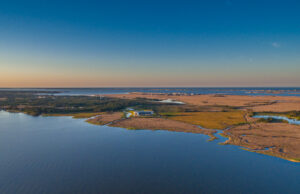 ECU's Integrated Coastal Programs (ECU ICP) is a leader in coastal and marine research, education, and engagement. ECU ICP includes the Coastal Studies Institute, ECU's Department of Coastal Studies, and ECU Diving and Water Safety.
The faculty and staff at the Coastal Studies Institute come from a variety of backgrounds and disciplines, as well as departments and organizations including ECU Department of Biology, ECU Department of Coastal Studies, NC Sea Grant, the North Carolina Renewable Energy Program, and the UNC Institute for the Environment.
Tour the ECU Outer Banks Campus and learn about the research, education, and engagement projects of CSI and ECU Integrated Coastal Programs through our 360 virtual tour.
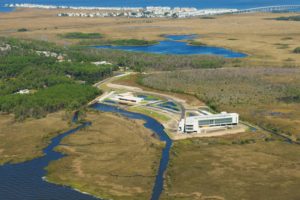 The ECU Outer Banks campus is home to the Coastal Studies Institute.
Located on Roanoke Island along the banks of the second largest estuary
in the United States, this coastal campus spans 213 acres of marshes, scrub wetlands, forested wetlands, and estuarine ecosystems.