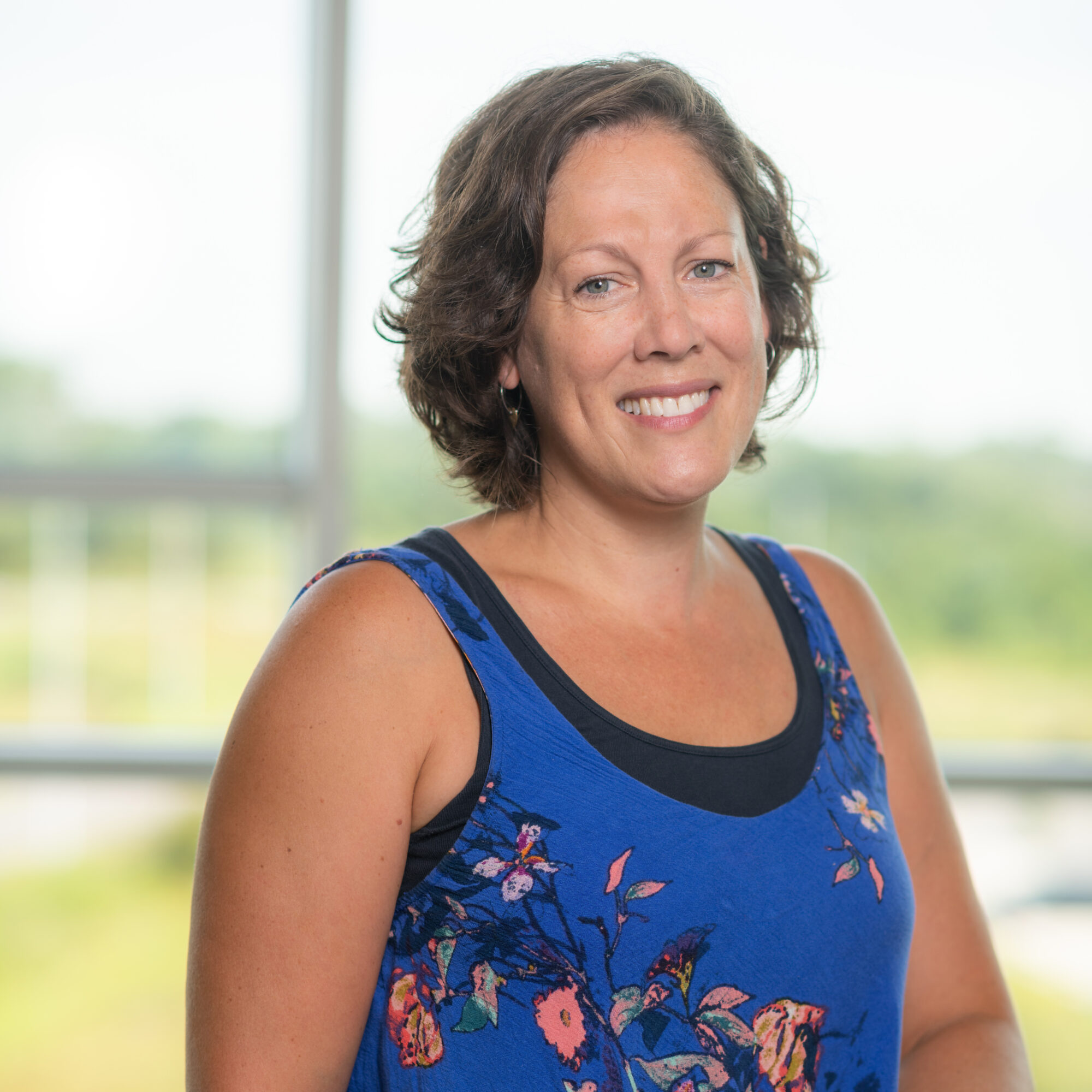
Lindsay Dubbs, Ph.D
Research Associate, North Carolina Renewable Ocean Energy Program
Co-Director, Outer Banks Field Site, UNC Institute for the Environment
Associate Director, North Carolina Renewable Ocean Energy Program
Office: Room No. 334
850 NC 345, Wanchese, NC 27981
Phone: 252-475-5492
Fax: 252-475-3545
Email: dubbs@email.unc.edu
Bio
Lindsay Dubbs joined the Coastal Studies Institute in 2012 but has been the ecology lecturer at the Outer Banks Field Site, hosted by CSI, since 2008.
Education
Ph.D. Environmental Sciences and Engineering, 2009 The University of North Carolina at Chapel Hill
M.S. Environmental Sciences and Engineering, 2004 The University of North Carolina at Chapel Hill
B.S. Biology and Environmental Studies, 2000 Tufts University, Medford, MA
Research Interests
Her research interests broadly focus on biogeochemistry and ecosystem-scale ecology. More specifically, she’s interested in how energy and nutrient dynamics in terrestrial, coastal, and nearshore marine ecosystems are influenced by energy generation and natural resource management decisions. She’s also interested in meaningfully engaging students, including undergraduates, in natural science research and place-based educational opportunities.
Current Projects
Salinity Gradient Energy – An Inexhaustible Clean Energy Resource for North Carolina, UNC: GA Research Opportunities Initiative – Douglas Call (NCSU), Orlando Coronell (UNCCH), Andy Keeler (ECU/CSI), Lindsay Dubbs (UNCCH/CSI), Joseph DeCarolis (NCSU)
Assessing the effects of Gulf Stream turbines on Sargassum communities: A follow-up study, NC: Renewable Ocean Energy Program – Lindsay Dubbs, Research Assistant Professor, (CSI), Michael Piehler, (CSI/UNCCH)
Assessing the effects of Gulf Stream turbines on Sargassum communities: A pilot study, NC: Renewable Ocean Energy Program – Lindsay Dubbs, Research Assistant Professor, (CSI/ UNCCH), Michael Piehler, (CSI/ UNCCH)
Public Attitudes and Issues Influencing the Public Acceptability of Marine Hydrokinetic Energy in Coastal North Carolina, NC: Renewable Ocean Energy Program – Andrew Keeler (CSI/ECU), Flaxen Conway (OSU), Adam Gibson (NCSU), Lindsay Dubbs (CSI/UNCCH), Sara Mirabilio (NC Sea Grant)
Publications
Dubbs, L., M. Piehler, and J. Colby (2015) An examination of pelagic Sargassum community primary productivity and nutrient cycling in the face of Gulf Stream based energy, OCEANS’15 MTS/IEEE Washington Proceedings.
Dubbs, L., A.G. Keeler, and T. O’Meara (2013) “Permitting, risk, and marine hydrokinetic energy development,” Electricity Journal 6(10), 64-74.
Carpenter, D.E. and Dubbs, L., eds. (2012) “Albemarle-Pamlico Ecosystem Assessment 2012: Albemarle Pamlico National Estuary Partnership,” http://www.apnep.org/c/document_library/get_file?uuid=ce87bd10-2560-4d7f-bbf2-01e8eaf579c5&groupId=61563
Dubbs, L.L. and S.C. Whalen (2010) “Reduced net CH4 consumption is a sustained response to elevated CO2 in a temperate forest,” Biology and Fertility of Soils, 4(6), 597-606.
Dubbs, L.L. and S.C. Whalen (2008) “Interactive influences of nutrient reduction and light on phytoplankton biomass, primary production, and community composition in the Middle Cape Fear River, North Carolina,” International Review of Hydrobiology, 93(6), 711-730.
 Based at the Coastal Studies Institute (CSI), the North Carolina Renewable Ocean Energy Program (NCROEP) advances inter-disciplinary marine energy solutions across UNC System partner colleges of engineering at NC State University, UNC Charlotte, and NC A&T University. Click on the links below for more information.
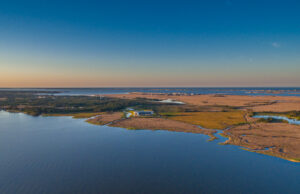 ECU's Integrated Coastal Programs (ECU ICP) is a leader in coastal and marine research, education, and engagement. ECU ICP includes the Coastal Studies Institute, ECU's Department of Coastal Studies, and ECU Diving and Water Safety.
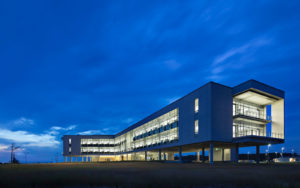
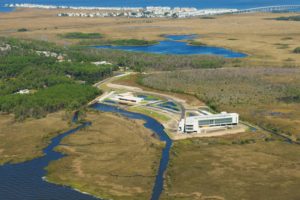 The ECU Outer Banks campus is home to the Coastal Studies Institute.