2024 North Carolina Renewable Ocean Energy PROGRAM Symposium
The 13th Annual North Carolina Renewable Ocean Energy Symposium will convene in person at the Coastal Studies Institute on April 8 and 9, 2024.
The North Carolina Renewable Ocean Energy Program (NCROEP) will be hosting the annual research symposium in person on April 8 and 9, 2024, at the Coastal Studies Institute (CSI) in Wanchese, NC. The two-day event will include keynote speakers, research presentations, a student poster contest, and workshops.
Registration
Registration is now closed. We are not accepting any additional student posters. If you would still like to register to attend, please contact Samantha Hamilton (HAMILTONSA17@ECU.EDU).
NCROEP research presentations
Each NCROEP-funded research project must present a high-level update of their research at the NCROEP Research Symposium. The 10-15 minutes long presentation will focus on how the research advances the state-of-the-art and summarize progress to date and plans for the remainder of the fiscal year.
Presenters are asked to remember that this is an interdisciplinary symposium. The content should target an audience with varied disciplinary expertise. Please be sure to define acronyms, use accessible language, and minimize the use of long formulas.
NCROEP student poster contest
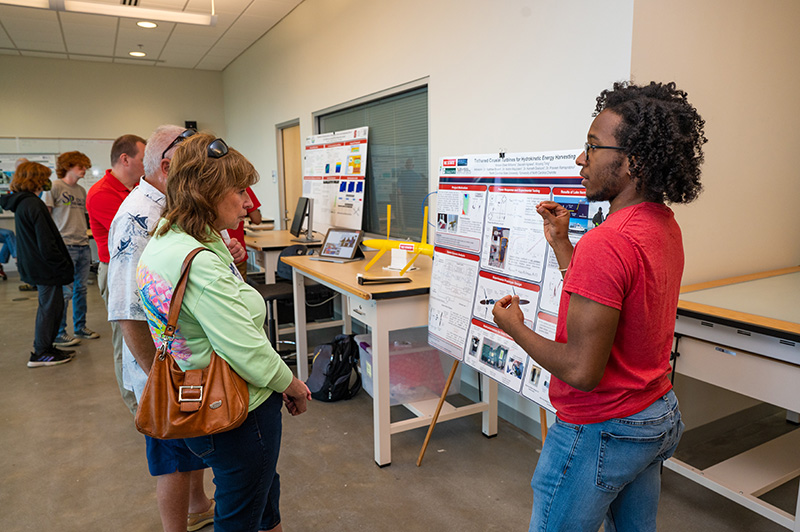
NCROEP-funded students are encouraged to register for the student poster contest. The first 15 poster presentation registrations received before the March 22, 2024 deadline will be accepted in the poster session and contest. Student poster presenters should be prepared to deliver 5-minute poster summaries about their research to the judges and other Symposium participants during the April 8 poster session and the reception on the evening of April 8. Awards for the best student poster and poster presentation will be announced at the end of the Symposium, on the afternoon of April 9.
Students, please note that your poster should target an audience with varied disciplinary expertise and highlight project goals, major accomplishments (including students supported, publications and patents, and external funding sought and/or received), and plans for the remainder of the funding cycle and further into the future. A 40″ x 30″ foam board will be provided for temporarily mounting your poster (using clips), so please limit the size of your poster to 42″ x 30″. A scoring rubric for the poster contest will be made available shortly and will be sent to all student registrants, so register early to receive guidance!
AGENDA (updated 4/1/24)
| Monday, April 8 | |
| Room 262, Coastal Studies Institute, 850 NC Hwy 345, Wanchese, NC | |
| 9:00 AM | Registration and breakfast |
| 10:00 AM | Welcome |
| 10:10 AM | Expectations and highlights |
| 10:20 AM | Keynote: Using waves to power oceanographic science – Ryan Coe, Wave Energy & Fluid Dynamics Modeling Specialist, Sandia National Lab |
| 10:50 AM | Break |
| 11:00 AM | Session 1 – Marine Energy Conversion Systems |
| 11:05 AM | Mechanical to Electrical Energy Harvesting – Michael Dickey*, Matt Bryant, David Kim, Meixiang Wang, Emily Duan |
| 11:25 AM | Counter-Rotating Centrifugal Reverse-Osmosis Desalinator – Kenneth Granlund*, Matthew Bryant, and Hooman Tafreshi |
| 11:45 AM | Development of a Hypertwist Power Take-Off for Marine Energy Applications – Wesley Williams* |
| 12:05 PM | InDEEP overview – Michael Dickey and Wes Williams |
| 12:15 PM | Lunch |
| 12:45 PM | Student poster session |
| 1:45 PM | Session 2 – Social, Economic, and Spatial Considerations (Part 1) |
| 1:50 PM | Resource Assessment for Combined Wind and Wave Energy Harvesting in Carolinas Offshore Wind Lease Areas – Dr. Saffeer Khan*, Mr.Anthony Grancagnolo, Mr. Patrick Hultberg, Mr Prithwiraj Chowdhury |
| 2:10 PM | Assess the Impact of Device Variability on the Economic Benefits of Marine and Hybrid Energy Systems on the Coast of North Carolina |
| 2:30 PM | Session 3 – Innovative System Components: Development and Optimization |
| 2:35 PM | Assessing the Lifetime Performance Marine Hydrokinetic Turbine Blades Through Advanced Computational Simulation – Andrew Ziccarelli* and Jeevan Sneha Sakthivel |
| 2:55 PM | Bio-Based Epoxy Natural Fiber Composites for Marine Energy Harvesting – Shahriar Chowdhury*, Oluwatimilehin Oluwajire*, Landon Grace, Theo Dingemans |
| 3:15 AM | Break for partial solar eclipse viewing (glasses provided) |
| 4:05 PM | Development of a Retrievable Offshore Polymeric Anchor (ROPA) for Supporting Multi-directional MHK Devices – Wesley Williams* and Mo Gabr* |
| 4:25 PM | Increasing Technology Readiness and Performance in Tethered Coaxial Turbines through Ocean Testing, Model Validation Experiments, and System Optimization – Matthew Bryant*, Kenneth Granlund*, and Andre Mazzoleni |
| 4:45 PM | Numerical Investigation of Oscillating Water Column Geometries for Enhanced System Efficiency – Sobhi Alowdi* and Nasim Uddin |
| 5:05 PM | Adaptive-Stiffness Power Take-Off System for Broadband Wave Energy Point Absorbers – Matthew Bryant* |
| Reception at Jennette’s Pier, Oceanview Hall | |
| 5:30 PM | Reception, Poster Session, and EDGE Award presentation |
| 6:30 PM | Dinner |
| Tuesday, April 9 | |
| Rm 262, Coastal Studies Institute, 850 NC Hwy 345, Wanchese, NC | |
| 8:00 AM | Registration and breakfast |
| 9:00 AM | Keynote: Tim Mundon, Chief Technology Officer, Oscilla Power, Inc. |
| 10:00 AM | CSI education programs overview – John McCord |
| 10:10 AM | Session 4 – Social, Economic, and Spatial Considerations (Part 2) |
| 10:15 AM | Assessing Knowledge Gaps and Misconceptions to Support Social Acceptance of Marine Renewable Energy in North Carolina – Eric Wade*, Linda D’Anna |
| 10:35 AM | Ocean Energy Supported Multi-Energy System Planning and Operation Optimization for Sustainable Coastal Community – Yang Chen*, Om Prakash Yadav, and Jun Chen |
| 10:55 AM | Fused Portfolio Optimization for Harnessing Marine Renewable Energy Resources: Exploring Opportunities for Improving Energy Density and Levelized Cost of Electricity – Anderson de Queiroz* and Chris Vermillion |
| 11:15 AM | Exploring the Feasibility of Co-Located Marine Renewable Energy Systems: A Mooring System and Economic Analysis in the North Carolina Coast – Anderson de Queiroz*, Mo Gabr*, Victor de Faria, Neda Jamaleddin |
| 11:35 AM | Atlantic Marine Energy Center – Martin Wosnik |
| 12:00 PM | Lunch |
| 12:30 PM | Session 5 – Innovative System Components: Development and Optimization (Part 2) |
| 12:35 PM | Design and Implementation of a Power-Scalable Marine DC Microgrid with a Modular EV Charger and Multi-Port Converters for Renewable Ocean Energy Integration – Muhammed Abdelraziq, Amiya Haque, Al Raji Billah, Iqbal Husain*, and Zeljko Pantic |
| 12:55 PM | Reliability and Health Monitoring for Marine Energy Microgrid – Jiale Zhou, Qiang Mu, Lucas Pereira, Zaheen Mustakin Tiefu Zhao*, and Babak ParkhidehTiefu Zhao, and Babak Parkhideh |
| 1:15 PM | CLEANcarolinas overview – Safeer Khan |
| 1:25 PM | NCInnovation – Derrick Welch |
| 1:35 PM | Announcements, incl. Student Poster Contest winners and FY25 NCROEP RFP schedule, and wrap-up |
| 2:00 PM | Fin |
Accommodations
Symposium attendees must make reservations themselves and are responsible for all costs. Please make your reservation at your earliest convenience.
We suggest considering the following hotels and inns:
- The Tranquil House Inn (252-473-1404): An Inn located in downtown Manteo, on the waterfront. A block of rooms ($149/night) has been reserved under “CSI NCROEP”.
- The Comfort Inn (252-441-6315): A hotel on the oceanfront in Nags Head. A block of rooms ($79 for the night of April 7th and $129 for April 8th) has been reserved under “CSI NCROEP”.
- The Holiday Inn Express (1-866-935-6410): An oceanfront hotel in Nags Head.
- The Roanoke Island Inn (252-473-5511): An Inn located in downtown Manteo. We will not be reserving a block of rooms, but this is a quaint Inn in downtown Manteo.
- The Oasis (252-441-5211): A hotel located on the causeway between Nags Head and Roanoke Island. We will not be reserving a block of rooms here, but it is a nice hotel overlooking the Sound.
If you have questions, please contact NCROEP Associate Director, Lindsay Dubbs.
 Based at the Coastal Studies Institute (CSI), the North Carolina Renewable Ocean Energy Program (NCROEP) advances inter-disciplinary marine energy solutions across UNC System partner colleges of engineering at NC State University, UNC Charlotte, and NC A&T University. Click on the links below for more information.
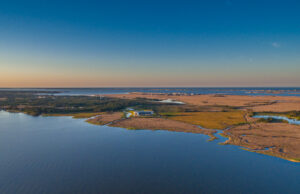 ECU's Integrated Coastal Programs (ECU ICP) is a leader in coastal and marine research, education, and engagement. ECU ICP includes the Coastal Studies Institute, ECU's Department of Coastal Studies, and ECU Diving and Water Safety.
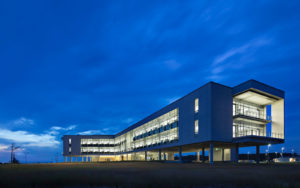
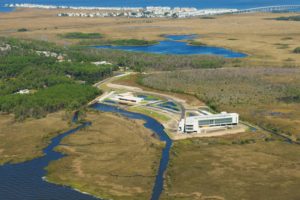 The ECU Outer Banks campus is home to the Coastal Studies Institute.