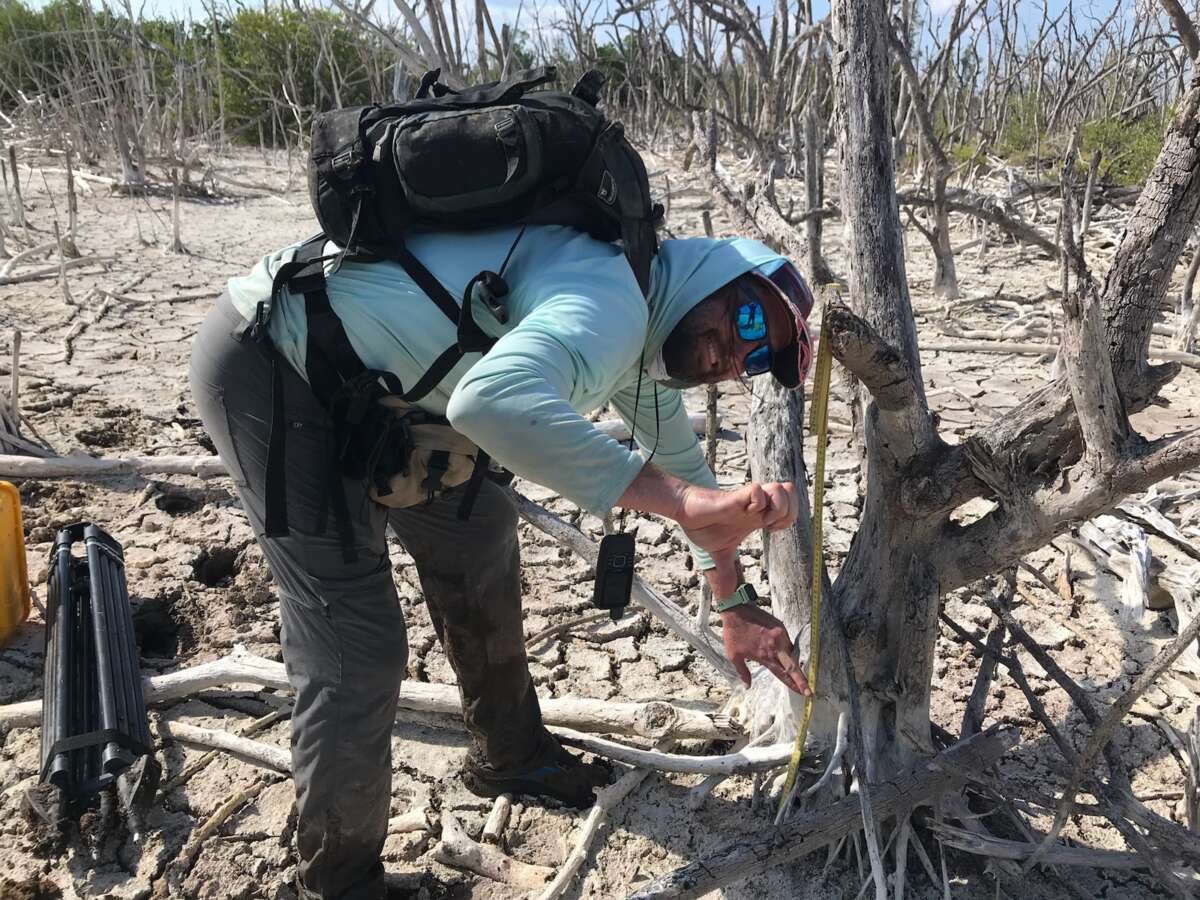
Dr. Sean Charles measures a mangrove trunk during a recent field campaign in the Everglades.
Coastal wetlands provide vital habitat for economically and environmentally important species, enhance water quality, and play a crucial role in reducing the impacts of climate change. Wetland plants and soils sequester carbon from the atmosphere more efficiently than any other ecosystem, fighting global and protecting coastal communities from rising seas and intensifying storms. However, storms, rising seas, and saltwater intrusion, in combination with local human impacts, also lead to wetland damage and loss. Charles and Fearn’s presentation will discuss wetland damage and innovative restoration projects both locally in Currituck Sound and in the Florida Everglades.
For those unable to attend, the program will be live-streamed, as well as archived for later viewing, on the CSI YouTube Channel.
 Based at the Coastal Studies Institute (CSI), the North Carolina Renewable Ocean Energy Program (NCROEP) advances inter-disciplinary marine energy solutions across UNC System partner colleges of engineering at NC State University, UNC Charlotte, and NC A&T University. Click on the links below for more information.
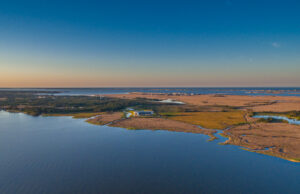 ECU's Integrated Coastal Programs (ECU ICP) is a leader in coastal and marine research, education, and engagement. ECU ICP includes the Coastal Studies Institute, ECU's Department of Coastal Studies, and ECU Diving and Water Safety.
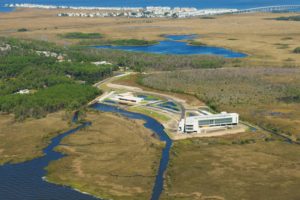 The ECU Outer Banks campus is home to the Coastal Studies Institute.