The Ocean Observing Initiative (OOI) Pioneer Array was envisioned as a re-locatable coastal array to investigate physical and biochemical exchange processes on the continental shelf and upper slope. The array infrastructure includes moorings, gliders, and AUVs. The Array was previously sited on the New England Shelf (NES), centered at the shelfbreak south of Martha’s Vineyard, MA.
Beginning in 2020, a series of scientific workshops were held to consider moving the Array to a new location, and a decision was made to relocate the Array to the Mid-Atlantic Bight (MAB) off the Outer Banks of North Carolina. Ocean observing data helps to track, predict, manage, and adapt to changes in the marine environment. The instrumented arrays gather physical, chemical, geological, and biological data from the air-sea interface to the seafloor, providing a wealth of information for research and education. Once the array is fully operational in 2024, the ocean data collected will be available online in near real-time to anyone with an Internet connection at Oceanobservatories.org.

Dr. Al Plueddemann, a senior scientist at Woods Hole Oceanographic Institute, will speak at the ECU Outer Banks Campus on April 20th for the public Science on the Sound event.
The new MAB site represents a different environment than the New England Shelf location and offers opportunities to collect data on a variety of cross-disciplinary science topics, including cross-shelf exchange and Gulf Stream influences, land-sea interactions associated with large estuarine systems, a highly productive ecosystem with major fisheries, processes driving biogeochemical cycling and transport, and fresh-water outflows during extreme rain events.
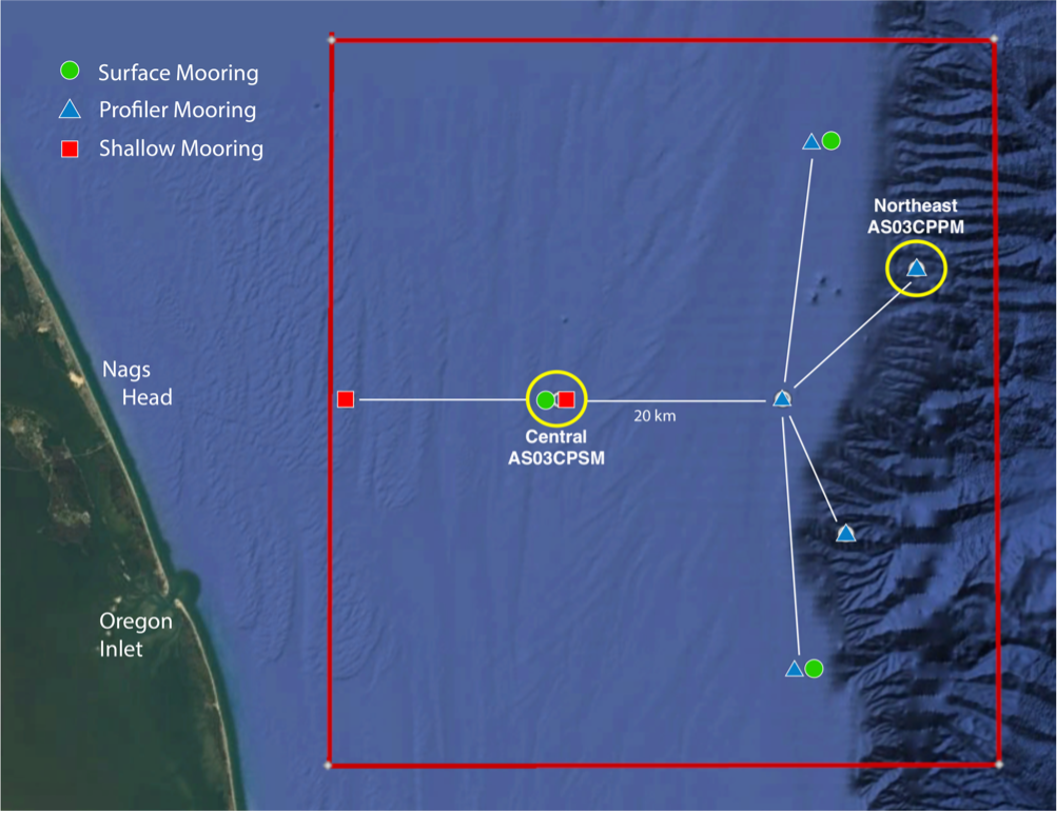
Schematic drawing of the Pioneer MAB moored array to be deployed off the coast of Nags Head, North Carolina. The full array, to be deployed in the spring of 2024, will consist of ten moorings at seven different sites (three sites contain mooring pairs).
 Based at the Coastal Studies Institute (CSI), the North Carolina Renewable Ocean Energy Program (NCROEP) advances inter-disciplinary marine energy solutions across UNC System partner colleges of engineering at NC State University, UNC Charlotte, and NC A&T University. Click on the links below for more information.
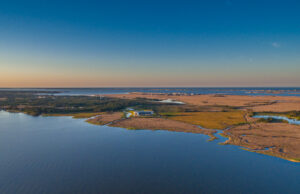 ECU's Integrated Coastal Programs (ECU ICP) is a leader in coastal and marine research, education, and engagement. ECU ICP includes the Coastal Studies Institute, ECU's Department of Coastal Studies, and ECU Diving and Water Safety.
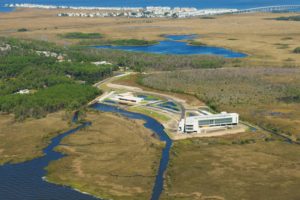 The ECU Outer Banks campus is home to the Coastal Studies Institute.